
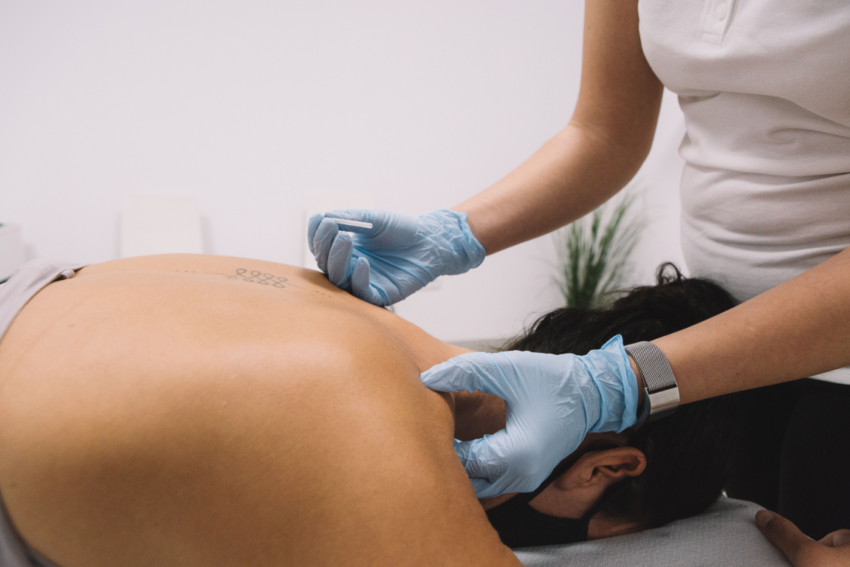
Dry needling can help relieve muscle pain, reduce tension, improve mobility, and accelerate healing by targeting tight trigger points in the muscles.
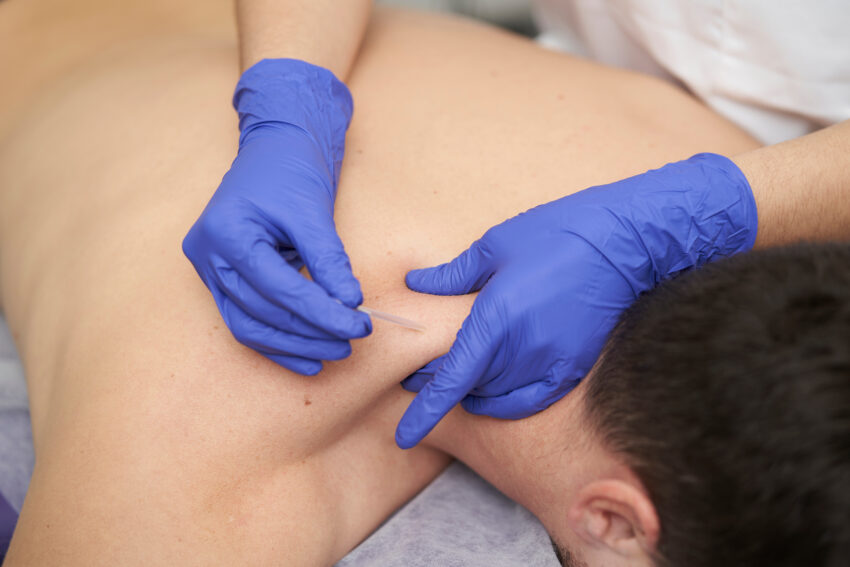
What Is Dry Needling?
Dry needling, also known as Intramuscular stimulation (IMS) is an effective treatment technique that we offer at our clinic. It involves the use of fine, sterile needles to target areas of tightness or knots, called myofascial trigger points, that can cause pain, stiffness, and limited mobility.
Benefits of Dry Needling
Dry needling triggers the body’s nervous system to release tension and increase circulation and promote healing in affected areas.
Benefits include reduced muscle pain and tension, improved range of motion and flexibility, and faster healing.
It is often used as an adjunct to other physiotherapy techniques such as exercise and/or manual therapy, to help alleviate musculoskeletal pain and improve movement.
Conditions Treated With Dry Needling
Dry needling can be used to treat various conditions including, but not limited to:
- Arthritis
- Sports Injuries
- Neck/Back/Shoulder/Knee/Hip pain
- Achilles/Patellar/Shoulder tendonitis
- Hip/Shoulder bursitis
- Rotator cuff injuries
- Plantar fasciitis
- Tennis elbow/Golfer’s elbow
- Sciatica
- Headaches and migraines
- Myofascial pain syndrome
- Fibromyalgia
What Happens During a Dry Needling Session
Dry needling is always part of a physiotherapy plan, not a stand-alone treatment. Your physiotherapist first assesses where your pain is coming from and whether dry needling is right for you. If it is, very thin, sterile, single-use needles are placed into tight bands of muscle, often called trigger points. You may feel a brief twitch or a deep ache, which usually settles quickly. The session is then followed by movement, exercise or hands-on treatment, so the improvement lasts.
To learn more about how trigger points cause pain, read our guide to myofascial trigger points and dry needling.
Dry Needling vs Acupuncture
Both use thin needles, but the reasoning is different. Dry needling is based on anatomy and how muscles and nerves work, and targets specific muscle trigger points identified during a physiotherapy assessment. Traditional acupuncture is based on traditional Chinese medicine principles.
Is Dry Needling Right for You?
Dry needling is not suitable for everyone. Let your physiotherapist know if you are pregnant, take blood thinners, have a bleeding disorder, a fear of needles, or a condition that affects your immune system. We will always explain the treatment and options before we start, and you can choose another approach at any time.
Dry Needling at TheraTouch, Carling Ave
Our clinic is at 2249 Carling Ave, Suite 201, near Woodroffe Ave and Lincoln Fields Station. Every appointment is one-on-one with your physiotherapist.
Frequently Asked Questions About Dry Needling
Most people feel little when the needle goes in. You may feel a short muscle twitch or a deep ache, and some soreness for a day or two afterwards, similar to after a workout.
It depends on your condition and how long you have had it. Some people notice a change after one or two sessions. Your physiotherapist will review your progress and adjust the plan.
It is commonly used for muscle pain and tension, neck and shoulder pain, back pain, headaches linked to muscle tension, and sports injuries.
When it is provided by a physiotherapist as part of your treatment, it is usually billed as physiotherapy. Coverage depends on your extended health plan, so check with your insurer.
Stay active, drink water, and follow the exercises your physiotherapist gives you. Heat or gentle movement can ease any soreness.